
LOSS HITS US ALL AT SOME POINT IN OUR LIVES …..
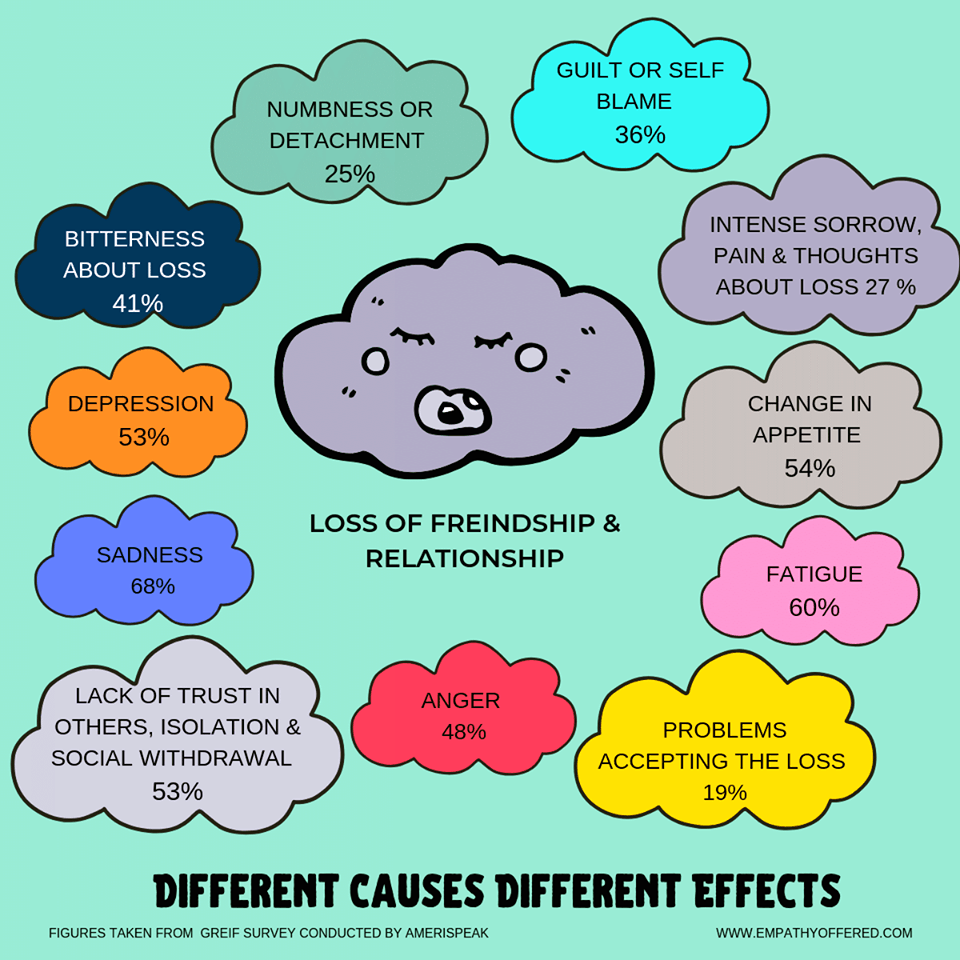
Yet no one teaches or really talks about how we can deal with it. Everyone has different ways that work for them, most of us seem to muddle through. A recent survey of 1000 participants showed nearly all (88%) had some type of emotional symptom while grieving, and two-thirds (68%) had physical symptoms.
Of course there’s different types of loss ?? – loss of a loved one, loss of a dream, loss of a friendship, loss of a pet, loss of friendship, health, our youth, beauty ….. and the effects are different for the different types of losses. You can see the effects in the 2 images created from a recent survey of 1000 people.
LIFE = ACCUMULATION OF LOSSES ?If you start thinking about life in terms of loss – it really is LIFE = accumulation of losses … friends, jobs, loved ones, possessions, health, relationships, dreams, things that mean something to us.
How we deal with this loss – whether we acknowledge, integrate, ignore, process or push away these losses start to become a pattern in our life.
From my own personal experience I never went back to my family home for over twenty years after my father’s sudden death. It was only as I grew older I realised this was a habit I had created and I could see patterns emerging in my coping mechanism.
COPING MECHANISMS THAT BECOME HABITSCoping mechanisms can be good at the time as they can get you through a tough time. But there is a danger of them becoming habits ingrained into everyday life. Sometimes people turn to numbing behaviour such as risky relationships, gambling, alcohol or substance abuse.
In my case I never returned to painful events – in fact I would flee. A way of escaping the pain. But the thing is the pain never actually went away, it was always there lingering.
UNRESOLVED BEREAVEMENT OR LOSS – THE SAME EFFECT
Sometimes people can feel that their “loss” is not as important as others, therefore they can’t justify being/ showing they are upset. For example the loss of a dream of a new house is not the same as losing a partner. Yes O.K it may not be, but it doesn’t mean your own feelings are not valid. Many of us just bury our feelings, emotions and thoughts, understandably to get us through the day. But what happens when you keep doing this? Living like this becomes a way of life? It doesn’t take a genius to work out eventually it gets to us. Call it a breakdown, burnout, a freak out – eventually it catches up. Talking with a qualified counsellor is one way of unpacking all of this in a safe, supported environment.
CHANGING DESTRUCTIVE PATTERNSI was just running away from the hurt and pain. Until running away became a part of my life – anything “painful” I created this capacity to “avoid”. After lots of self development and personal growth I was able to manage and change this destructive pattern.
I wonder how many of our daily habits are “coping mechanisms initially created to deal with loss” and that we just get used to them? that they become everyday habits? …… that we don’t even realise? and perhaps if we took a moment to stop and reflect we would realise they aren’t really healthy for us and changing them would lead us to a happier, healthier, more contented life perhaps?
BUT CHANGE IS DIFFICULT/ NEAR ENOUGH IMPOSSIBLE?
I hear you. Change is difficult. Trying to do it can knock the hell out of you. Or then perhaps you might be ready? There is obviously some people who just aren’t ready when they come to therapy. Just accepting things being the way they are and having the opportunity to talk to a qualified counsellor/ psychotherapist without being judged is sometimes enough for some.
Counselling is classed as a talking therapy. But I totally get some people aren’t good at talking. Or when things are too raw, painful, shocking you just can’t bring yourself to talk. To say the words. Those words. You might be wondering what happens then in a counselling session? That’s why I use a number of creative mediums with clients such as Russian Dolls, Play Dough, Sand Play, The Empty Chair Cards. But I can assure your counselling session will always travel at your pace – not mine.


Ready to find out more?
I’m Yasmin – a qualified counsellor, registered with the BACP and follows their ethical guidelines. She is available for counselling sessions in Leeds, Bradford, Harrogate and Otley. She is also available for online counselling also via secure video calling.
Ways To Contact Me Getting Started? Issues I Specialise In Book Online


